
For weeks, he watched his wife leave home every Thursday at exactly the same time, always offering only a vague explanation. Slowly, suspicion began to grow, and he convinced himself she might be hiding another man. One evening, unable to ignore his doubts, he followed her across town to a small unfamiliar house. But instead of discovering betrayal, he found something that left him deeply ashamed. His wife was quietly caring for an elderly woman who had once been her late mother’s closest friend, keeping a promise made years earlier. What he had mistaken for secrecy was actually loyalty, compassion, and grief. That day taught him how easily fear can create the wrong story when we do not know the whole truth.
For nearly two months, my wife had been leaving the house every Thursday at exactly 5:30 in the evening.
At first, I did not think much of it.
She would check the time, pick up a small handbag, sometimes take flowers or a grocery bag, and tell me she had “something to take care of.”
That was all.
No explanation.
No details.
Then she would return about two hours later.
The strange part was that this happened every single week.
Same day.
Same time.
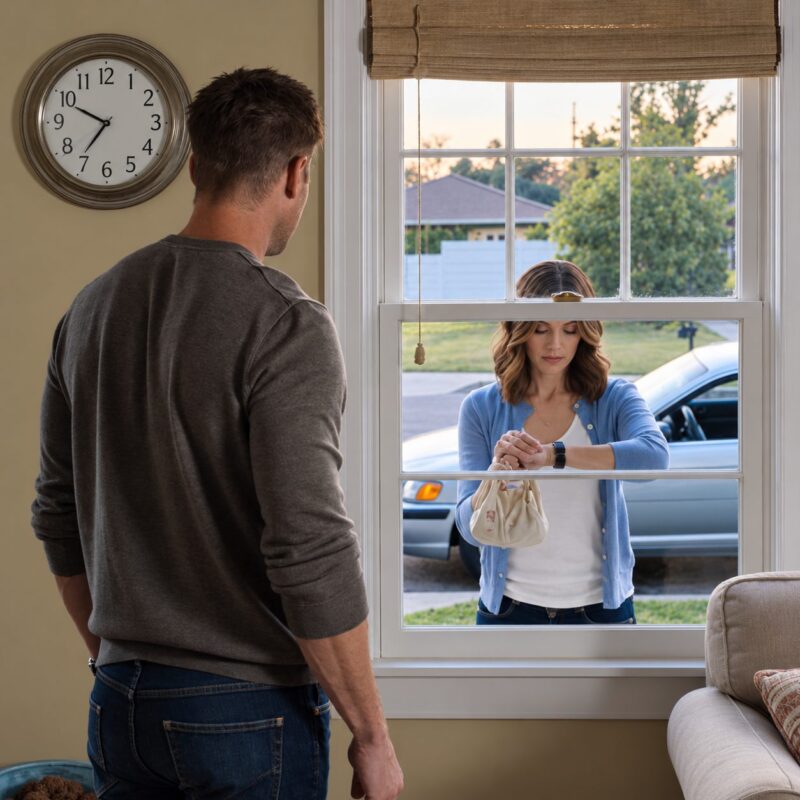
Same mysterious routine.
My wife, Laura, and I had been married for twelve years. We had always been close. We knew each other’s habits, friends, schedules, and even the small things we never said out loud.
That was why the secrecy bothered me.
One Thursday, I stood near the living-room window while she put on her coat.
“You’re going out again?” I asked.
She hesitated for half a second.
“Yes. I won’t be long.”
“Where are you going?”
She picked up a grocery bag from the kitchen counter.
“I just have something I need to do.”
Then she kissed my cheek and left.
I watched her walk toward the car.
Before opening the door, she checked her phone.
Then she looked around quickly.
That tiny gesture changed everything in my mind.
For the first time, I wondered if there was someone else.
I hated myself for thinking it.
Laura had never given me a reason not to trust her.
But once suspicion enters your mind, it starts connecting details that may have nothing to do with each other.
I remembered how she sometimes turned her phone face down.
How she had recently seemed distracted.
How she always avoided giving me a clear answer about Thursday evenings.
By the following week, I had convinced myself that I needed to know the truth.
So when Thursday came, I did something I am still not proud of.
I followed my wife.
I waited until she drove away, then got into my car and kept several vehicles between us.
She drove through familiar streets at first.
Then she entered a neighborhood on the other side of town.
My stomach tightened.

I had never heard her mention anyone who lived there.
Eventually, she slowed down and stopped in front of a small, old house with a narrow garden.
I parked farther down the street.
Laura got out of the car.
She was carrying a bouquet of flowers and two bags of groceries.
I stared at the house.
For some reason, seeing the flowers made my fears worse.
I imagined another man opening the door.
I imagined explanations.
Arguments.
Twelve years of marriage collapsing on a quiet suburban street.
Laura walked through the garden gate and disappeared inside.
I sat in my car for almost a minute.
Then I got out.
My heart was pounding as I approached the house.
The front curtains were partly open.
I knew I should turn around.
Instead, I looked through the window.
And everything I had imagined disappeared instantly.
There was no other man.
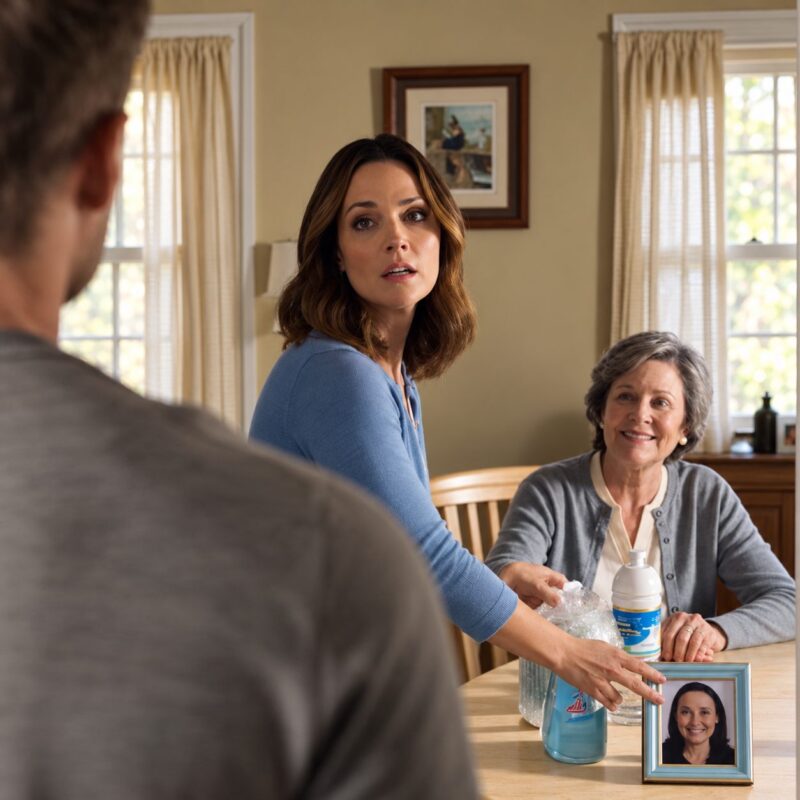
Laura was standing beside an elderly woman.
The woman looked about seventy-five, with short gray hair and a thin frame. She was sitting in an armchair with a blanket over her legs.
Laura placed the flowers in a vase.
Then she carried the groceries into the kitchen.
A few minutes later, she returned with a glass of water and a small medication organizer.
She knelt beside the woman, handed her the water, and waited while she took her medicine.
Then Laura carefully pulled the blanket higher around her shoulders.
I stood outside, frozen.
The shame arrived almost immediately.
I had followed my wife because I thought she was betraying me.
Instead, she was caring for someone.
I was about to leave when the elderly woman took Laura’s hand.
Laura smiled, then opened her handbag and removed an old photograph.
Even from outside, I could see the woman in the picture looked very much like Laura.
Her mother.
Laura’s mother had passed away three years earlier after a long illness.
The elderly woman looked at the photo and touched it gently.
Then I heard Laura’s voice through the slightly open window.
“Mom made me promise I would never let you be alone.”
The elderly woman’s eyes filled with tears.
“She worried too much about me,” she said.
Laura smiled.
“She loved you.”
That was when I finally understood.
The elderly woman was Eleanor, Laura’s mother’s closest friend. They had known each other since they were young.
I remembered hearing the name years ago, but I had never met her.
After Laura’s mother died, Eleanor had become increasingly isolated. Her children lived far away, and her mobility had become worse.
Laura had been visiting her every Thursday.
Quietly.
Without telling anyone.
I stepped backward.
A branch cracked beneath my shoe.
Laura immediately turned toward the window.
Our eyes met.
For a moment, neither of us moved.
Then she came outside.
“What are you doing here?” she asked.
There was no anger in her voice yet.
Only shock.
I could not think of a respectable answer.
“I followed you.”
Her expression changed.
“Why?”
I looked down.
Because saying it aloud made it sound even worse.
“I thought…”
She waited.
“I thought you might be seeing someone.”
Laura stared at me.
For several seconds, she said nothing.
Then she looked toward the house.
“You thought I was cheating on you?”
“I’m sorry.”
Her eyes filled with hurt.
“You could have asked me.”
“I did.”
“No. You asked where I was going. You didn’t tell me you were afraid.”
She was right.
I had allowed suspicion to become a story before giving her the chance to explain.
“Why didn’t you tell me about Eleanor?” I asked quietly.
Laura took a breath.
“Because I promised my mother I would look after her. Eleanor hates feeling like a burden. She didn’t want people knowing she needed help. So I kept it private.”
I looked through the window again.
Eleanor was still sitting inside, holding the old photograph.
“I feel terrible.”
Laura’s expression softened slightly.
“I wasn’t hiding another person from you,” she said. “I was hiding someone’s vulnerability.”
That sentence stayed with me.
We went inside together.
Eleanor looked at me and smiled.
“So you must be the husband,” she said.
I laughed awkwardly.
“Yes. The suspicious one, apparently.”
Laura gave me a look, but Eleanor laughed.
I helped put away the remaining groceries.
Later, I repaired a loose cabinet handle while Laura prepared tea.
By the time we left, Eleanor had invited me to come again.
The next Thursday, I did.
Not because I wanted to monitor my wife.
Because I wanted to help.
After that, Thursday evenings changed.
Sometimes Laura went alone.
Sometimes I joined her.
Sometimes we brought dinner.
Sometimes we simply sat with Eleanor while she told stories about Laura’s mother.
I learned more about my wife during those evenings than I had in years.
And I learned something uncomfortable about myself too.
Suspicion can feel like certainty when we only have half the story.

I had seen secrecy and imagined betrayal.
The truth was almost the opposite.
Laura had been keeping a promise.
Not out of dishonesty.
Out of loyalty.
And ever since then, whenever something does not make sense between us, I try to remember that Thursday afternoon.
Before creating a story in my head, I ask a question.
Because sometimes the secret someone is keeping is not about betrayal at all.
Sometimes it is about kindness they never expected anyone to see.