What began as a small roadside restaurant in California eventually became one of the most recognizable food brands in the world. Richard and Maurice McDonald transformed their business by simplifying the menu, speeding up service, and creating a system that could be repeated efficiently. Later, Ray Kroc recognized the enormous potential of that model and pushed it far beyond a single location. The journey was not easy: it involved financial risks, disagreements, strict quality standards, and the challenge of expanding into completely different markets. Yet those difficulties helped shape a business system that could grow on a massive scale. McDonald’s story shows how a simple idea, combined with organization, persistence, and bold expansion, can develop into a global empire.
Today, it is difficult to imagine a major city without the famous Golden Arches of McDonald’s. But this enormous story did not begin with an international corporation. It began with a small restaurant created by two brothers.
In 1940, brothers Richard and Maurice McDonald opened their restaurant in San Bernardino, California. At the time, it was a typical drive-in restaurant with a large menu and employees serving customers at their cars.
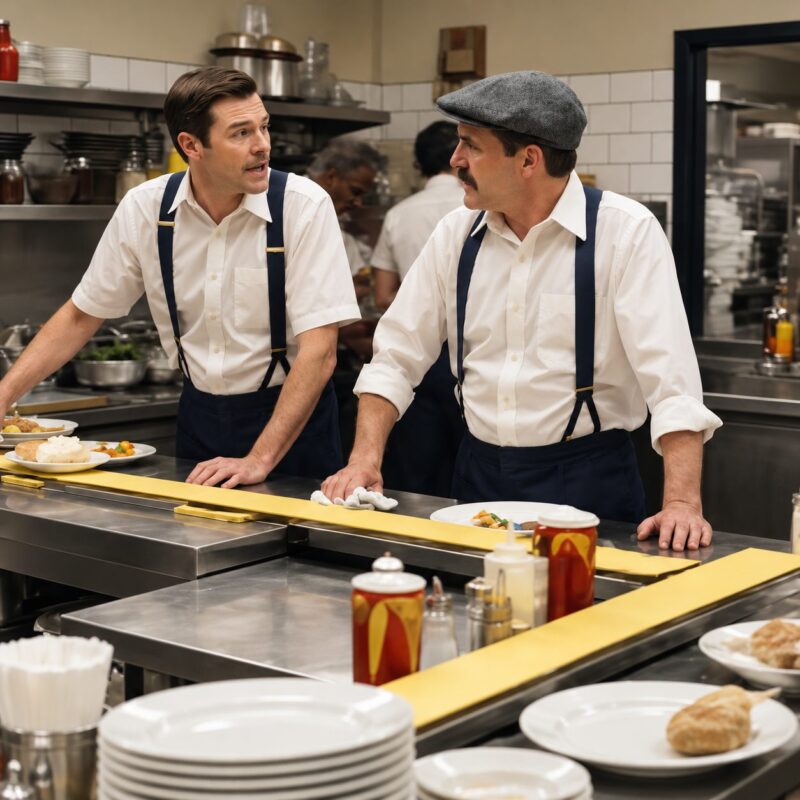
At first, the business was doing reasonably well, but the brothers soon noticed an important problem. The large menu, the many different dishes, and the traditional service system required a large number of employees, a great deal of time, and high operating costs. Customers often had to wait, the kitchen became complicated, and the restaurant was not operating as efficiently as the brothers wanted.
They began carefully studying their sales and noticed that most customers were actually ordering only a few main items, especially hamburgers. That observation led to an idea that would eventually change the fast-food industry.
In 1948, the brothers made a bold decision. They temporarily closed their restaurant and completely redesigned the way it operated. When it reopened, the menu was much smaller and every stage of the work had been carefully organized. The new system became known as the “Speedee Service System.”
The idea was simple: each employee performed a specific task, the number of menu items was limited, and orders were prepared as quickly as possible. Hamburgers were sold for only 15 cents.
But this was a major risk.
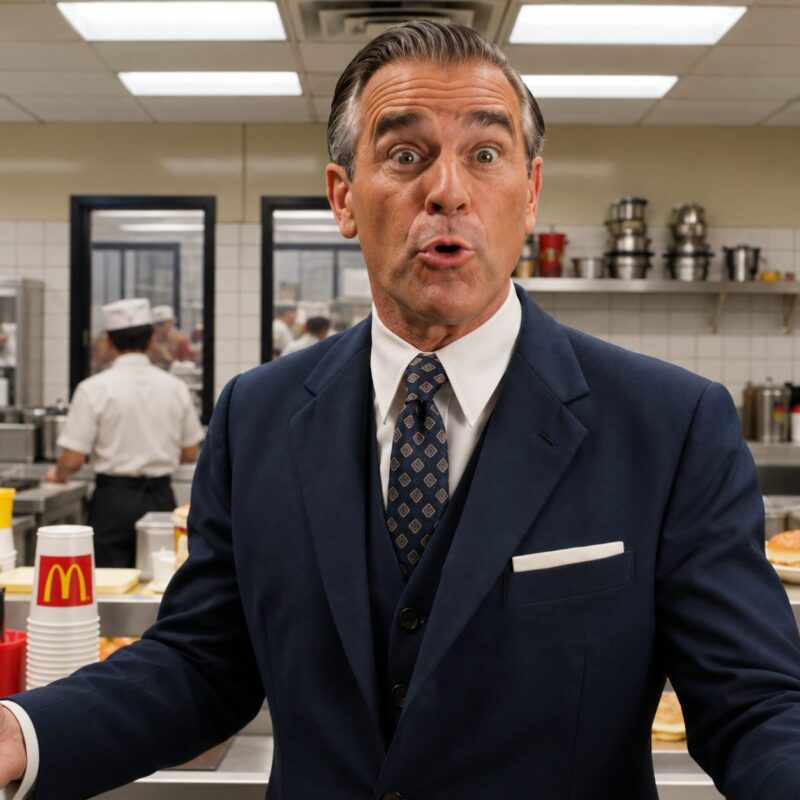
Customers were used to carhop service and restaurants with broad menus. The brothers were essentially rejecting many of the things that were considered normal in the restaurant business at the time. They could not know for certain whether customers would accept the new concept.
At first, things were not easy. But gradually, people realized that they could get a hamburger, fries, and a drink very quickly, without having to wait for long periods. The kitchen operated almost like a production line. Every movement was planned, and the same food could be prepared in almost the same way again and again.
The system proved successful, and the brothers began experimenting with expanding their concept through franchising. However, the next major turning point in McDonald’s history came in 1954.
At that time, Ray Kroc was a 52-year-old salesman who sold Multimixer milkshake machines. He became curious when he learned that a small restaurant in California was using several of the machines at the same time. Kroc decided to visit the restaurant himself to understand how one location could create such high demand.
When he arrived in San Bernardino, he was impressed by what he saw.
There were many people waiting outside the small restaurant, but the line moved quickly. Customers placed their orders, and only a short time later, they received their meals.
Kroc saw more than just a successful restaurant. He saw a system that, in his view, could be reproduced across the entire country.
He proposed helping the McDonald brothers expand the restaurant network. From that moment, McDonald’s entered a new phase, moving from a single restaurant toward a much larger franchise system.
On April 15, 1955, Kroc opened his first McDonald’s restaurant in Des Plaines, Illinois. According to the
company’s history, first-day sales totaled $366.12.
But the road to major success was far from automatic.
Opening new restaurants meant finding people who were willing to invest, learn the same operating system, and strictly follow the company’s standards. For Kroc, simply selling hamburgers was not enough. He wanted customers entering a McDonald’s in different cities to receive as similar an experience as possible.
That required training, monitoring, and clear operational rules.
The restaurant network gradually expanded. At the same time, differences between Kroc and the McDonald brothers about the future of the business became more obvious. The brothers had created an efficient restaurant system, while Kroc wanted to turn it into a national, and eventually international, chain.
In 1961, the McDonald’s business rights were purchased from the brothers for $2.7 million. Around the same period, Hamburger University was also created, where restaurant managers and employees were trained in the company’s operating systems and standards.
From that point, expansion accelerated.
New restaurants opened in different U.S. states. The Golden Arches became one of the most recognizable symbols of the brand. The company focused heavily on fast service, consistency, cleanliness, and customer experience.
But McDonald’s ambitions were not limited to the United States.
In 1967, the company began its international expansion by opening restaurants in Canada and Puerto Rico. During the following decades, the brand entered many other countries.
Each new market brought new challenges. Different countries had different tastes, cultures, and eating habits. The company had to preserve its basic operating system while also adapting parts of its menu to local preferences in some markets.

That strategy helped McDonald’s continue growing.
Over time, new products were also added to the menu, including items that would later become famous. For example, the Filet-O-Fish was added to the national menu in 1965, while the Big Mac followed in 1968.
The most interesting part of the story, however, is that everything began with a very simple problem: two brothers wanted to understand how they could serve customers faster while reducing complexity.
They did not begin with the goal of creating one of the world’s most recognizable restaurant brands. They simply examined how their small restaurant worked, reduced the menu, and created a more efficient system.
Later, Ray Kroc saw a much larger opportunity inside that system.
The journey from a small restaurant to an international chain with thousands of locations involved risks, disagreements, financial challenges, and countless experiments. But the simplified operating model, fast service, and franchise system became the foundation for future growth.
Today, the story of McDonald’s is often seen as an example of how a relatively simple business idea can grow to an enormous scale when it can be clearly organized, repeated, standardized, and adapted to different markets.
And that entire journey began with one small restaurant, a few simple food items, and two brothers asking a basic question:
“How can we do this faster and better?”