
I had imagined this moment for almost two years, but nothing could have prepared me for the way my child looked at me when I finally walked through that door. I had spent months completing paperwork, rebuilding my life, finding stable work, and proving that I was ready to bring my child home. Still, one fear followed me all the way to the children’s home: what if too much time had passed? What if my child no longer trusted me? When our eyes finally met across the small room, neither of us moved at first. Then I whispered the words I had practiced a hundred times: “I came to take you home.” What happened next reminded me that love can survive separation, but rebuilding a family requires more than one emotional reunion. It requires patience, honesty, and the courage to begin again.
The hallway was much brighter than I remembered.
That was the first thing I noticed when the caretaker opened the front door and asked me to follow her inside.
Sunlight came through tall windows and fell across the pale floor. Children’s drawings covered one wall. Somewhere farther down the corridor, I could hear the quiet sound of toys being moved and someone laughing.
My hands were shaking.
I tried hiding them by holding my bag with both hands.
“Are you all right?” the caretaker asked gently.
I nodded.
“I think so.”

But I wasn’t sure.
For almost two years, I had imagined this day.
Sometimes I imagined my child running toward me the moment I appeared.
Other times I imagined the opposite.
A blank expression.
Silence.
Maybe even anger.
And honestly, I would have understood any of those reactions.
My child, Alex, had been only four when everything in our lives fell apart.
I had lost my job within weeks of losing our apartment. I had no stable place to live, almost no savings, and no family nearby who could take us in.
For several months, I tried to manage everything myself.
I moved from one temporary room to another. I worked whenever I could. I kept telling myself that things would improve soon.
But eventually, I had to admit something I had been terrified to admit.
Love alone was not enough to give my child the stability they needed.
With the help of a social worker, Alex was placed temporarily in a children’s home while I worked to rebuild our life.
I remember the day I left more clearly than almost anything else.
Alex had held my hand and asked:
“You’re coming back, right?”
I had knelt down and promised:
“Yes. I’m coming back.”
At the time, I believed it would take a few months.
It took much longer.
Finding stable employment was harder than I expected.
Then came the search for housing.
Paperwork.
Meetings.
Assessments.
Every step seemed to lead to three more.
I visited whenever I was allowed.
At first, Alex would run toward me.
Later, the visits became different.

My child still hugged me, but there was always a little hesitation afterward.
A question that was never completely spoken.
When are you actually taking me home?
I hated that question because I never had a definite answer.
So eventually, I stopped making promises about dates.
Instead, I said:
“I’m working on it.”
And I was.
Every single day.
Then, finally, the call came.
Everything had been approved.
I had a stable job.
A small apartment.
A bedroom ready for Alex.
And I was allowed to bring my child home.
I barely slept the night before.
Now, standing in that bright hallway, I felt less prepared than ever.
The caretaker stopped beside a doorway.
“Alex is inside.”
My heart seemed to stop.
I looked at her.
“Does Alex know I’m coming?”
She nodded.
“Yes. But I think seeing you will still feel different.”
I understood exactly what she meant.
She opened the door.
Alex was standing near the other side of the room.
For a few seconds, neither of us moved.
My child had grown.
That thought hit me harder than I expected.

Alex was six now.
Taller.
The roundness of the little face I remembered had started to change.
But the eyes were exactly the same.
Those eyes stared at me as if trying to decide whether I was real.
I could feel tears filling my own.
“Hi,” I whispered.
Alex did not answer.
I took one small step forward.
Then stopped.
I did not want to rush.
I did not want to make this moment about what I needed.
So I simply stood there.
Finally, Alex spoke.
“Why are you crying?”
I laughed softly through the tears.
“Because I’m happy to see you.”
Alex looked toward the caretaker, then back at me.
I swallowed.
There were so many things I wanted to say.
I wanted to apologize for every night I had not been there.
Every birthday morning.
Every scraped knee.
Every bedtime story someone else had read.
But none of those words seemed right for that moment.
So I said the simplest thing I could.
“I came to take you home.”
Alex’s eyes widened slightly.
For a second, I thought my child had not understood.
Then came the question.
“Home… with you?”
“Yes.”
“Today?”
My voice almost disappeared.
“Yes. Today.”
Alex took one step toward me.
Then another.
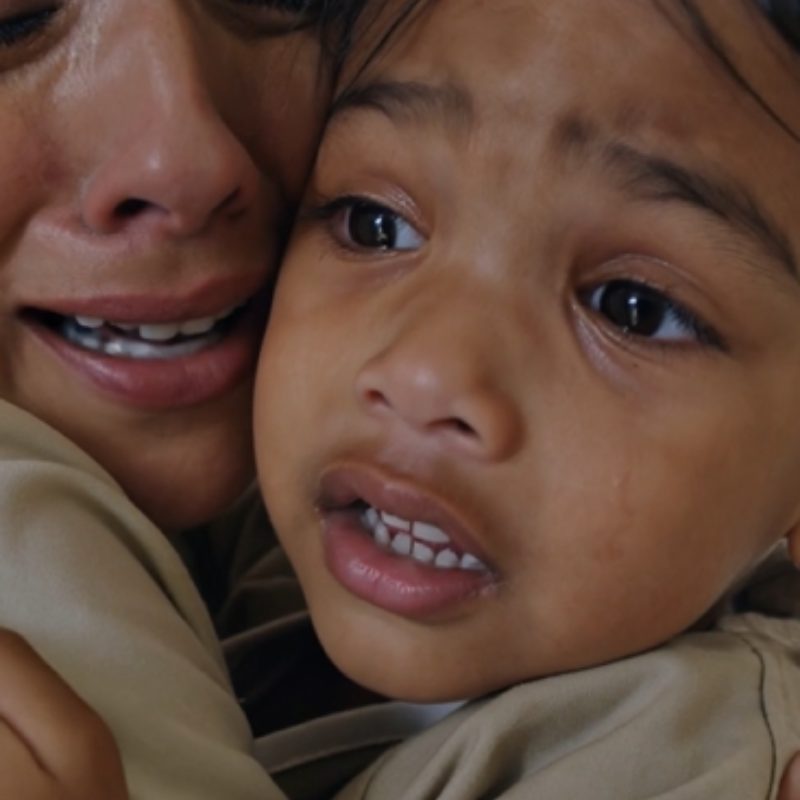
Slowly.
Carefully.
As if afraid that moving too quickly might make everything disappear.
I dropped to my knees.
My arms opened almost without me thinking.
Alex stopped a few feet away.
Then suddenly ran.
The impact nearly knocked me backward.
Small arms wrapped around my neck.
I held my child tighter than I had ever held anyone.
Alex was crying.
So was I.
For several seconds, neither of us spoke.
Then, against my shoulder, I heard a trembling voice.
“Mom… did you come for me?”
That question broke my heart in a way I still cannot fully explain.
I pulled back just enough to see Alex’s face.
“Yes, my love,” I whispered. “I came for you.”
Alex searched my eyes.
“You’re not leaving again?”
There it was.
The fear I had known would be there.
I wanted to say something enormous.
Something perfect.
Instead, I chose honesty.
“I’m taking you home today. And I’m going to do everything I can to make sure you always know where I am.”
Alex stared at me for another second.
Then hugged me again.
The caretaker quietly turned away, giving us privacy.
A little later, we packed the few belongings Alex wanted to bring.
A stuffed rabbit.
Several drawings.
Two books.
A small toy car.
I had imagined bringing home bags full of things.
Instead, everything important fit inside one small suitcase.
Before we left, Alex walked back to the caretaker.
“Can I come visit?”
The caretaker smiled.
“Of course.”
That question reminded me of something important.
The people in that home had cared for my child when I could not.
They were not villains in our story.
They had been part of the bridge that helped us reach this day.
Outside, Alex held my hand tightly.
At the car, my child stopped.
“Is my room really ready?”
“Yes.”
“What color?”
“You told me blue was your favorite.”
A small smile appeared.
“It still is.”
When we reached the apartment, Alex walked through every room slowly.
The kitchen.
The living room.
The bathroom.
Finally, we reached the bedroom.
There was a blue blanket on the bed.
Books on a shelf.
And beside the pillow sat another stuffed rabbit that looked almost like the old one.
Alex looked at me.
“You remembered.”
“Of course I remembered.”
That first evening was not perfect.
Alex became quiet during dinner.
Later, my child asked twice whether I would still be there in the morning.
At bedtime, Alex asked me to leave the hallway light on.
I did.
Then I sat outside the bedroom door long after Alex fell asleep.
I understood something important that night.
Bringing my child home was not the end of the story.
It was the beginning.
Trust would not return because of one hug.
There would be difficult questions.
There would be fear.
Maybe anger.
There would be days when Alex remembered that I had once left, even if I had believed I was doing what was safest.
So I made a promise to myself.
I would not expect my child to forget.
I would simply keep showing up.
Breakfast.
School mornings.
Homework.
Bath time.
Bedtime stories.
Ordinary days.
Because sometimes the biggest promises are rebuilt through the smallest routines.
Months later, one rainy evening, Alex climbed onto the sofa beside me.
Without looking up, my child said:
“Do you know what I like best about being home?”
“What?”
“When I wake up, you’re still here.”
I had to look away for a moment.
Not because I was sad.
Because I finally understood what home meant to my child.
Not a room.
Not a bed.
Not even a particular building.
Home was knowing that the person you loved would still be there in the morning.
And after everything we had lost, that was exactly what I intended to give.