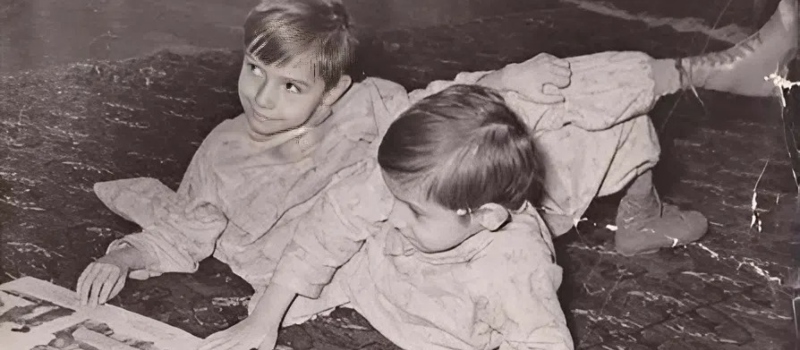
Masha and Dasha were born in the cold, gray streets of Moscow in 1950, joined at the waist, sharing a single body but possessing two independent minds. From the very beginning, their lives were anything but ordinary. Their mother, Yekaterina Krivoshlyapova, was told that her daughters had perished soon after birth due to pneumonia, but in truth, the Soviet state had other plans. The twins were whisked away to a medical institute, where scientists, led by the ambitious and infamous Pyotr Anokhin, planned to use them as living experiments. 🧬
The institute became their home, their prison, and their playground all at once. Because Masha and Dasha shared a circulatory system but had separate nervous systems, Anokhin saw them as perfect subjects for exploring human physiology under extreme conditions.
The girls were subjected to freezing ice baths, scorching heat, and painful stimuli while the other sister was closely observed. They were even injected with radioactive iodine to trace the flow of chemicals between them. From birth to around age twelve, sleep deprivation, invasive procedures, and relentless tests shaped every day of their lives. 🌡️
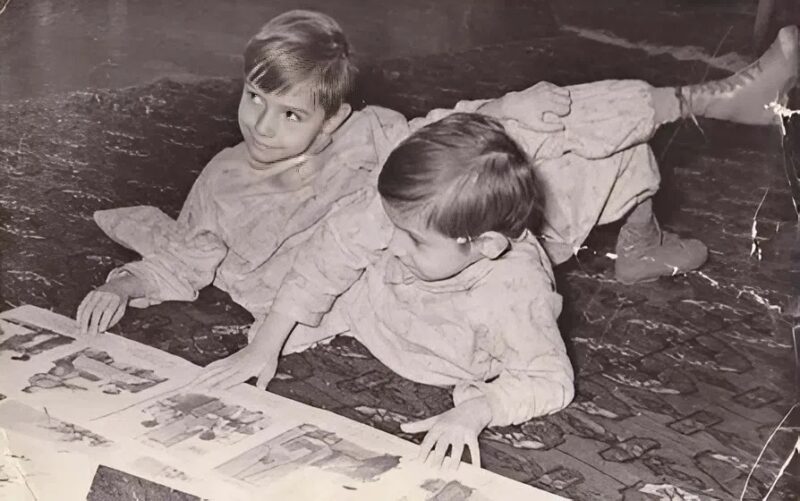
Despite the cruelty surrounding them, the twins quickly developed contrasting personalities. Dasha was empathetic, cooperative, and quick to adapt. When asked to put on socks or complete motor tasks, she obeyed, focused, and precise. Masha, on the other hand, became rebellious early on. She refused to follow instructions, threw socks across the room, and displayed a stubborn, manipulative streak that only grew with age. As they endured one experiment after another, the institute captured every moment on film, documenting both their suffering and the subtle differences between the sisters’ reactions. 🎥
Masha’s behavior was not limited to defiance. As the years passed, she grew controlling and abusive toward Dasha, both physically and verbally. Friends and caregivers observed how Masha would scream threats, push, and even strike her sister, asserting dominance over her shared body. Dasha, in contrast, remained gentle, patient, and quietly resilient. She longed for normality—a life outside the constant scrutiny of scientists, a life where she could choose her own path and pursue her own happiness. 💔

When they reached adolescence, the tensions between them escalated. Dasha fell in love with a fellow student named Slava, a young man who treated her with kindness and respect. Masha, however, could not tolerate another person encroaching on the territory she claimed over both of their lives. She harassed Slava verbally and physically, forcing Dasha into secretive, stolen moments of affection. The strain became unbearable for Dasha, who at the age of eighteen, attempted to hang herself in despair. Masha intervened, not out of care, but out of irritation, and life continued under the same unrelenting roof of control. 💔
Years later, the twins were finally allowed to reconnect with their birth mother, Yekaterina, who had never stopped mourning the daughters she was told had died. The reunion was bittersweet; Dasha embraced the possibility of maternal love, but Masha, ever possessive and wary of change, drove their mother away after only four years of attempted reconciliation. The twins returned to their isolated routine, now adults trapped in the same body but divided by unbridgeable psychological chasms. 🕊️

As adults, Masha and Dasha maintained the patterns formed in childhood. Dasha longed for connection, even if it meant living in the shadow of her sister. She developed a dependency on alcohol, sometimes hoping that the effects would travel through their shared bloodstream and dull Masha’s aggressiveness. Masha, meanwhile, avoided romantic entanglements entirely but exhibited a curious fascination with women in films, displaying a form of affection and desire that she rarely allowed to manifest outwardly. The sisters were bound physically, but their inner worlds had diverged dramatically. 🍷
Then, on a spring morning in 2003, life took a turn that no experiment could have predicted. Masha suffered a sudden heart attack. Dasha, deeply attuned to her twin, immediately recognized the life-threatening situation. Despite the urgency of the doctors urging her to separate from Masha’s body to prevent further complications, Dasha refused. She cradled her sister, whispering apologies and reassurances that they were finally free from the eyes of their tormentors. ⏳

Hours passed, and Masha’s life ebbed away. But something miraculous—or perhaps terrifying—began to happen. Dasha felt a strange surge of energy and awareness she had never experienced before. It was as if Masha’s consciousness, unspent and unyielding, began to merge with her own. Memories, emotions, and instincts that belonged solely to Masha intertwined with Dasha’s gentle psyche. Where she had once felt fear, confusion, and grief, there now bloomed a clarity, a sharp cunning, and an undeniable strength that belonged to both of them. ⚡
The transformation was immediate. Dasha, now carrying fragments of Masha within her, rose from the hospital bed with a startling vitality. The doctors were baffled; not only had she survived the toxic exposure from Masha’s body, but she seemed… different. She moved with the confidence and decisiveness that had always been Masha’s domain. Yet, in her eyes, there remained the warmth and empathy that had defined Dasha all along. The world had changed, and she was no longer the same person, nor entirely the same twin. 🌌

With her new consciousness, Dasha decided to leave Moscow, leaving behind the legacy of pain and abuse that had dominated their lives. She traveled to distant cities, seeking both solitude and purpose, all while carrying the lessons, memories, and complexities of two intertwined lives. What was once torment became power; what was once tragedy became a secret resilience. She was no longer simply Dasha. She was both, and she was whole in a way the scientists had never dreamed possible. 🌠
In the end, the story of Masha and Dasha was not one of mere suffering or abuse. It was a story of survival, transformation, and the unexpected mysteries of human connection. In life and in death, the twins defied the boundaries of science, leaving behind a legacy that whispered of something greater—something unbreakable, strange, and beautifully human. 💫