For centuries, women have carried the weight of expectations they never chose. Some bend under it. Some break. And a rare few rise, transforming pain into something almost luminous. 🌅
Anmol Rodriguez was never meant to survive.
She was only two months old when her life was split into a before and an after. On a humid afternoon in Mumbai, while she lay in her mother’s arms, drinking milk and drifting toward sleep, a shadow darkened the doorway. A hand lifted. A bottle tipped. And in a single, unspeakable moment, acid rained down on mother and child. 💔
The reason was as cruel as the act itself. Her father had wanted a son.
He fled before the echoes of screams faded. Neighbors rushed in. The air smelled of chemicals and fear. They wrapped the burned bodies in sheets and ran toward the nearest hospital, praying that something—anything—could be saved.
Anmol’s mother did not survive.
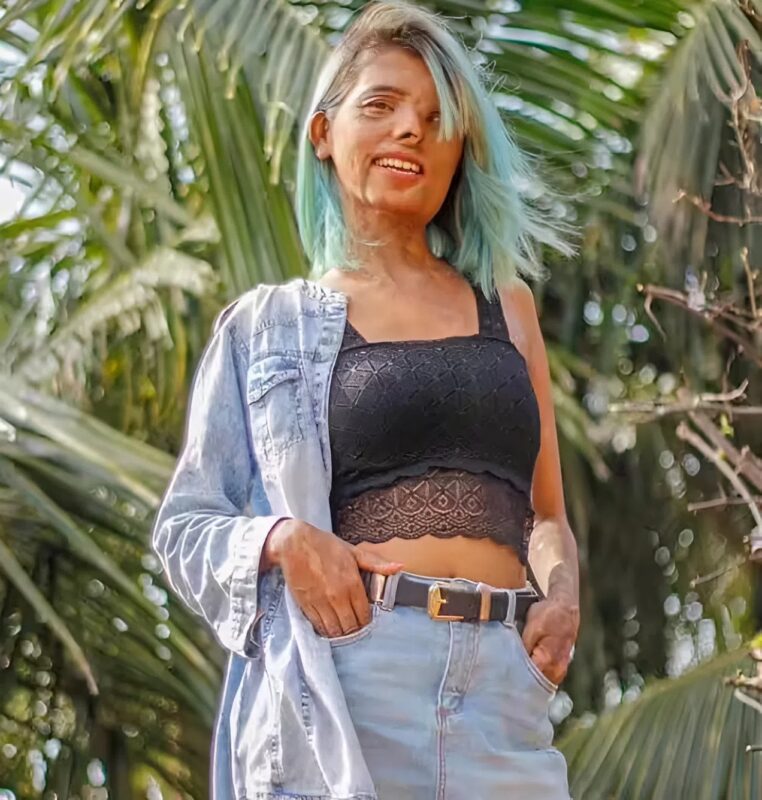
Anmol did.
The doctors would later say it was a miracle. One of her eyes was permanently blind. Much of her tiny face was scarred beyond recognition. But her heart kept beating, stubborn and rhythmic, as if refusing to surrender to a world that had already rejected her. 🫀
For five long years, the hospital became her universe. Nurses took turns rocking her to sleep. Interns pooled their salaries to pay for surgeries. Surgeons worked with trembling precision on skin that had barely begun to know life. She learned to walk in sterile corridors, clutching at white coats instead of a mother’s sari.
When her wounds finally healed enough for her to leave, she was taken to Shree Manav Seva Sangh orphanage. It was the first place where she heard laughter without machines humming in the background. The caretakers welcomed her gently, but the children—children are honest in ways adults are not.
They stared.
Some cried when they first saw her. Some hid behind doorframes. Anmol did not understand why their games stopped when she approached. She would touch her face and feel uneven ridges but could not see what frightened them. Mirrors became confusing objects. She sensed difference before she understood it.
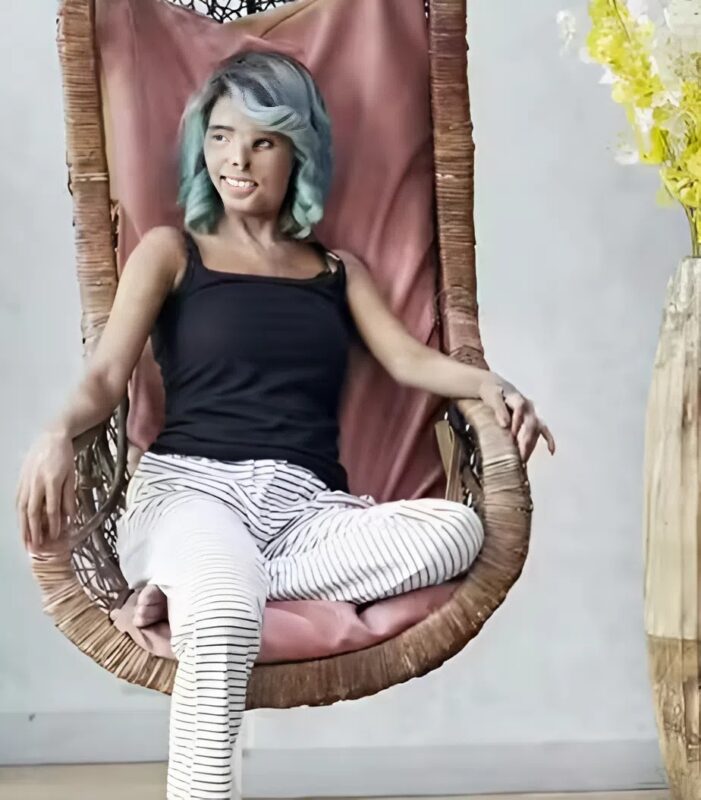
Yet time is a patient sculptor. As the years passed, the same children who once avoided her began sharing crayons and secrets. They discovered that Anmol told the best bedtime stories, that she could mimic teachers perfectly, and that she laughed louder than anyone else. 🎈
Still, the outside world was harsher.
At school, whispers followed her like unwanted shadows. Strangers stared openly. Once, a woman pulled her own child closer as if Anmol were contagious. That evening, Anmol cried into her pillow, not because of the woman, but because she had started to wonder if her father had been right—if being a girl truly made her less.
The thought terrified her more than the scars ever had.
So she did what few expected: she chose education as her rebellion. 📚 She studied relentlessly, earning scholarships that carried her from classrooms filled with doubt to college corridors buzzing with ambition. Knowledge became her armor.
It was in college that something shifted.
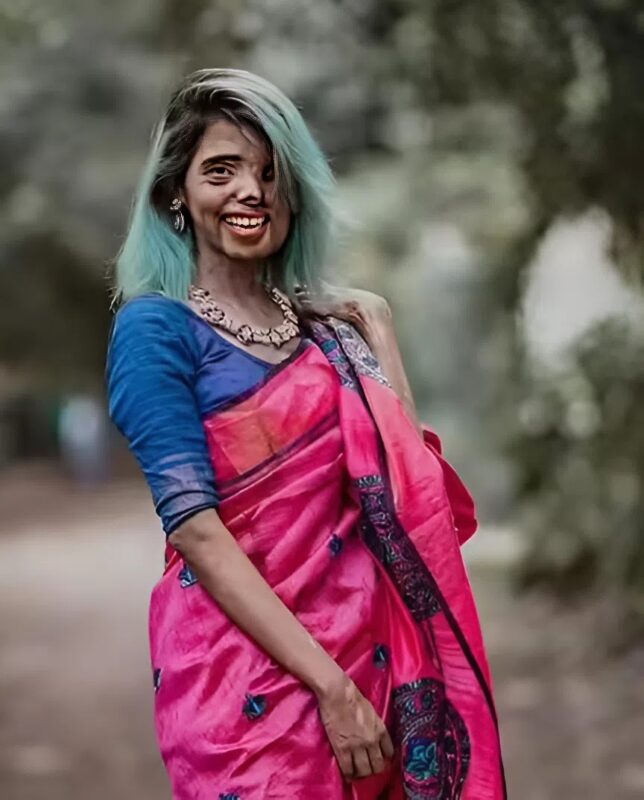
Fashion week posters covered the walls. Students experimented with color and style. For the first time, Anmol saw clothing not as fabric, but as expression. She began designing her own outfits—bold patterns, flowing silhouettes, unexpected combinations. She wore bright reds, electric blues, gold earrings that caught the light. ✨
People started turning their heads.
At first, she thought they were staring at her scars again. But then compliments followed. “You look powerful.” “Your style is fearless.” “You have presence.”
Presence.
It was a word she had never associated with herself.
She realized something quietly revolutionary: her scars did not erase her beauty—they redefined it. And if she could stand confidently in a room, perhaps others like her could too.
That idea became the seed of the Acid Survivor Sahas Foundation. 💪 She began reaching out to other acid attack survivors, many of whom hid behind curtains, afraid of markets, buses, and mirrors. She organized counseling sessions, skill-building workshops, and job placement programs. She visited hospitals to speak to new survivors who felt their lives had ended.
“They burned your skin,” she would say softly, “not your future.”
Her words carried weight because they came from lived truth.
Social media amplified her message. Her Instagram account filled with photos—not airbrushed or filtered, but unapologetically real. She posed in traditional saris, structured blazers, flowing gowns. Each image told the same story: I am still here. 🌺
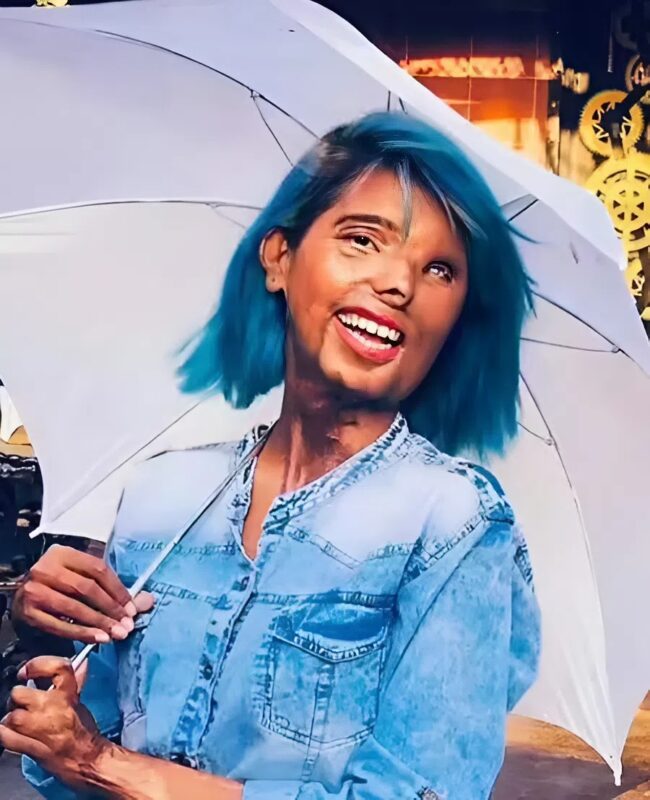
By twenty-three, Anmol had received offers to model. Brands admired her resilience; photographers admired her intensity. Interviews poured in. Headlines called her a symbol of courage. She smiled through it all, but deep inside, she guarded a secret ache.
She had never searched for her father.
People often asked if she hated him. She would shrug and say she felt nothing. But late at night, she wondered what kind of man could walk away from his own child.
Then, one monsoon evening, the past found her.
A letter arrived at the foundation’s office. The handwriting was shaky. Inside was a single page.
“I am dying,” it read. “I have no one. I know I don’t deserve forgiveness, but I wish to see you once before I go.”
There was no signature, but she knew.
For days, she carried the letter in her bag. Her team advised against going. Friends begged her to ignore it. “You owe him nothing,” they insisted. And they were right.
But Anmol felt something unexpected—not anger, not even curiosity. It was closure calling her name.
She visited the small, dimly lit room where he lay. The man on the bed looked fragile, almost unrecognizable. Illness had hollowed him out. When he saw her, tears pooled instantly.
“You survived,” he whispered.
“Yes,” she replied calmly. 🌧️
He tried to speak again, but words tangled in regret. She listened without interrupting as he spoke of shame, loneliness, and years spent hiding from his own guilt. He asked for forgiveness, voice breaking.
Anmol stood silently for a long moment.
“I forgave you years ago,” she finally said. “Not for you. For me.”
The words surprised even her.
She did not stay long. As she walked out into the rain, she felt lighter—not because he had apologized, but because she had faced the ghost of her beginning and refused to let it define her ending.
Months later, Anmol stood on a runway under blinding lights. Cameras flashed. The audience rose in applause as she walked, steady and radiant. 👠 But this time, her smile held a deeper truth.
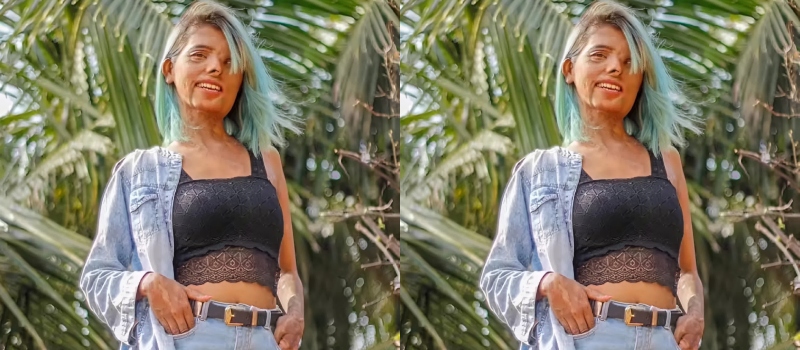
Her ultimate dream was no longer just to become a commercial acid attack survivor model. It was to open a residential design school exclusively for survivors—where fashion, art, and entrepreneurship would merge into independence. 🏫
And she did.
The Acid Survivor Sahas Foundation expanded into a creative institute. Survivors who once hid their faces now stitched garments, managed accounts, taught classes. They were not projects. They were leaders.
The unexpected twist was not that Anmol became famous.
It was that the little girl once abandoned for being born female grew up to create a world where women like her were not pitied, but powerful. 🔥
Acid had tried to erase her story before she could even speak.
Instead, she rewrote it—line by line—until the ending belonged entirely to her.