I have a little girl. Her name is Amelia. Amelia loves dolls, jumping on the swing, and pretending she’s a superhero saving the world. She giggles uncontrollably when Jocelyn, her older sister, chases her around the living room. Amelia is full of energy, curiosity, and the occasional tantrum that makes me sigh and smile at the same time. 🥰
But Amelia isn’t like other girls. She was born with Apert Syndrome, a rare condition where some of her bones fused too early. I didn’t know anything about it when I first held her in my arms, moments after she came into this world on August 12, 2016. That morning started like any other, with excitement and a little fear about managing two tiny children only 19 months apart. Jocelyn was perfect, sleeping through the night and rarely sick. I thought our family would be the picture of normal.
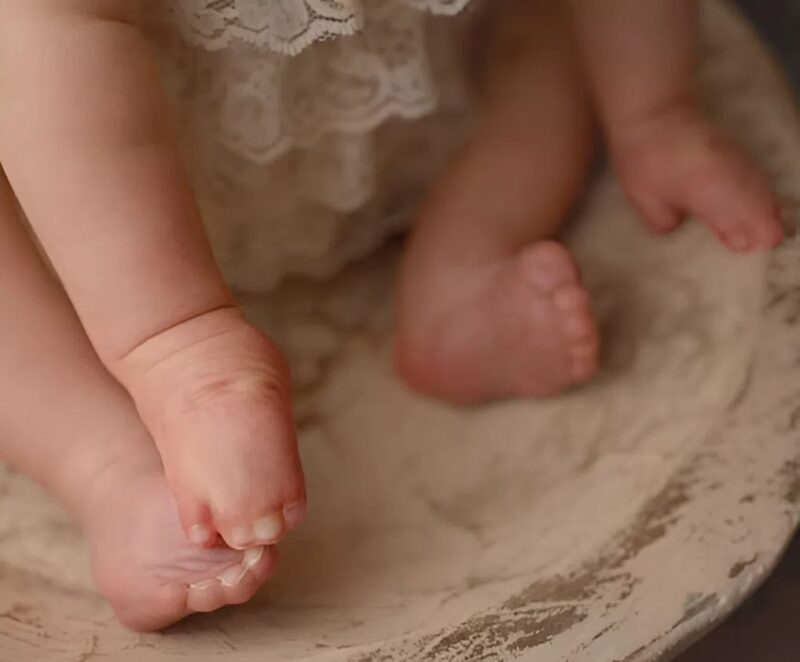
The moment Amelia was placed on my chest, I noticed her fingers—they were fused together. Then her toes. My husband, Joel, checked her hands and whispered questions I didn’t yet know how to answer.
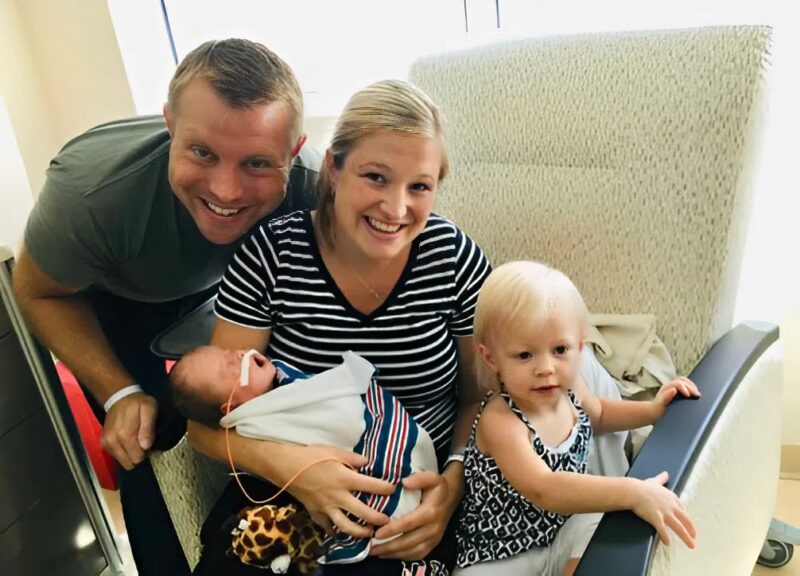
Soon, the NICU team whisked her away, and I was left alone, suddenly unsure of everything I thought I knew about motherhood. I remember asking for a soda and being handed Diet Pepsi instead. It seemed ridiculous then, but that small moment grounded me.
The first five days in the NICU were a blur. Doctors explained Apert Syndrome to us in careful terms: premature fusion of bones, not caused by anything I had done. I learned that Amelia’s skull, fingers, toes, and even her cervical spine were all affected. It was overwhelming, but the community of other parents living with Apert Syndrome shared stories that gave me hope. We created Amelia’s Adventure with Apert Syndrome, a small page for our daughter to celebrate her milestones. 🌟
Home became a whirlwind of appointments. Some weeks we saw four to six doctors, therapists, or specialists. Amelia had a cleft palate, so she couldn’t breastfeed. I pumped around the clock while juggling Jocelyn, appointments, and my own emotions.
Therapy helped me process the shock, guilt, and the deep, unconditional love I felt for this little girl who was changing my life in ways I hadn’t imagined.
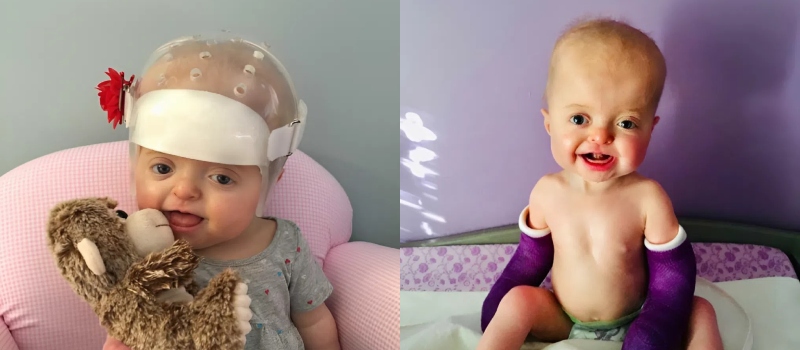
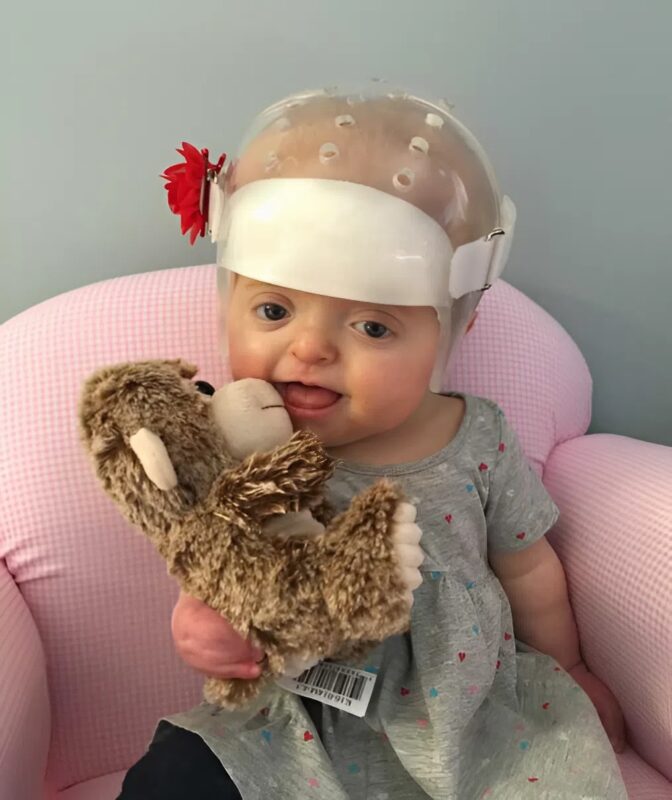
Her first surgery came when she was only a few months old. A frontal orbital advancement reshaped her forehead and left a zig-zag scar across her head. For months, she had to wear a helmet nearly 24/7, which caused sores and frustration. More surgeries followed—posterior skull reconstruction, syndactyly releases for her fingers and toes, and cleft palate repair. Each time, we held our breath in the waiting rooms, counting down the hours until she would emerge, groggy but smiling, ready to continue her unstoppable journey. 💪
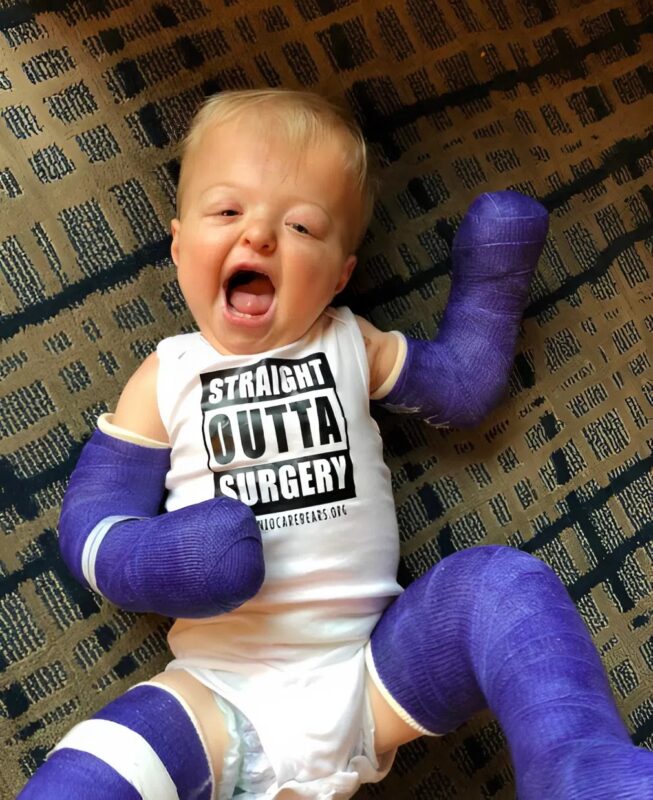
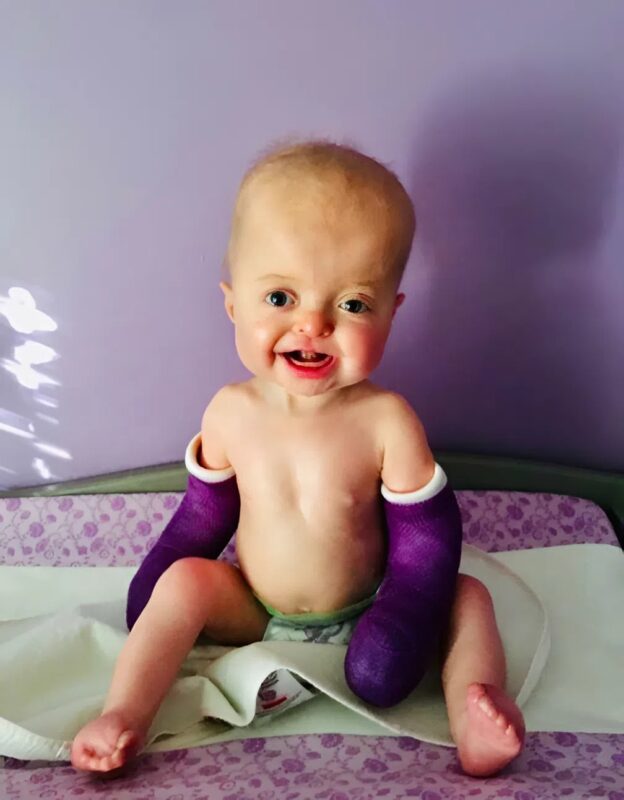
Amelia endured everything with remarkable bravery. The distractors on her skull, which we had to turn twice a day, made her cry and scream. Yet even through the tears, she learned resilience. When her limbs were encased in casts, she colored through them, crawled, and even learned to walk. Nothing slowed her down. Every recovery, every scar, became a testament to her courage.
As she approaches preschool, I feel a mix of nerves and excitement. Children stare, sometimes whisper, but Amelia meets their curiosity with smiles and boldness. She has already learned to advocate for herself, to shine even when the world doesn’t understand her differences. She is more than her surgeries, more than her scars—she is Amelia. And she wants, above all, to be loved. 💖
One afternoon, while Amelia played outside with Jocelyn, I sat on the porch sipping my tea and watching them. Amelia spotted a butterfly and chased it across the yard. I noticed something strange—her shadow on the grass looked… different. The outline of her fingers, her toes, even her head formed shapes that didn’t belong to her, shapes that seemed almost magical. I blinked and rubbed my eyes, convinced it was my imagination.
Then I heard a whisper—not from my mouth, not from the air, but inside my mind: “You see me because she chose you.” My heart raced. Amelia’s shadow shimmered, split into multiple colors, and for a brief moment, I could see tiny glimpses of what her life might become—a life not limited by her condition, but amplified by it. Her courage, her joy, her indomitable spirit were casting something into the world that only a parent could witness: a light of possibility, hidden in plain sight. 🌈✨
I realized then that Amelia’s adventure was far bigger than any surgery, therapy, or appointment. It was a secret gift, one she would reveal slowly, in her own time, to the world. She wasn’t just surviving; she was creating magic simply by being herself. And in that moment, I understood that the challenges were not the story. The story was her brilliance, her resilience, and the love that she inspired in everyone lucky enough to know her.
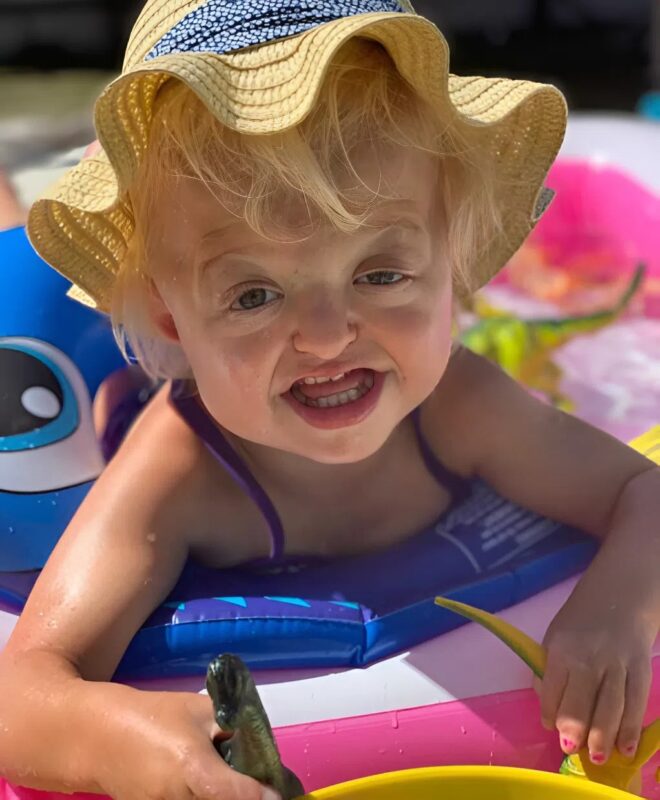
I have a little girl. Her name is Amelia. She has Apert Syndrome, yes—but she also has something extraordinary. Something unseen by doctors, by strangers, and even by me until that afternoon on the porch. Amelia doesn’t just live—she transforms. And somehow, I know that one day, the whole world will see the magic she’s been showing me all along. 🦋