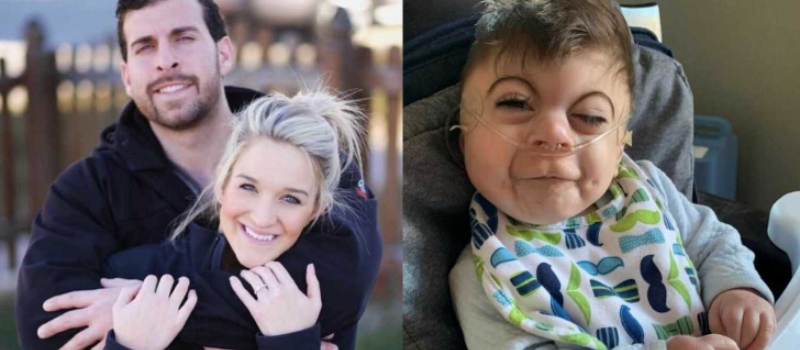
We had waited anxiously for what felt like forever to see our baby on the ultrasound screen again. It had been ten long weeks, and due to an insurance hiccup, we had missed the opportunity for any scans between 20 and 30 weeks. The morning of our 30-week appointment, my heart raced with a mix of excitement and fear. Every step into the hospital felt heavier than the last.
The same technician who had greeted us with warmth in the past smiled at us again and led us to the ultrasound room. There was light chatter at first, but then silence settled like a thick blanket. Minutes passed, each one stretching endlessly, until I finally asked, “Is everything okay?” She smiled softly, turned off the screen, and left the room. I turned to Giovanni, my fiancé, tears already welling, whispering, “I knew it.” That day, we learned that our baby’s heart had severe defects. We were told he might have a syndrome, and that we had “no choice” but to continue the pregnancy. The words struck me harshly. How could anyone speak so matter-of-factly about a life barely begun? 💔
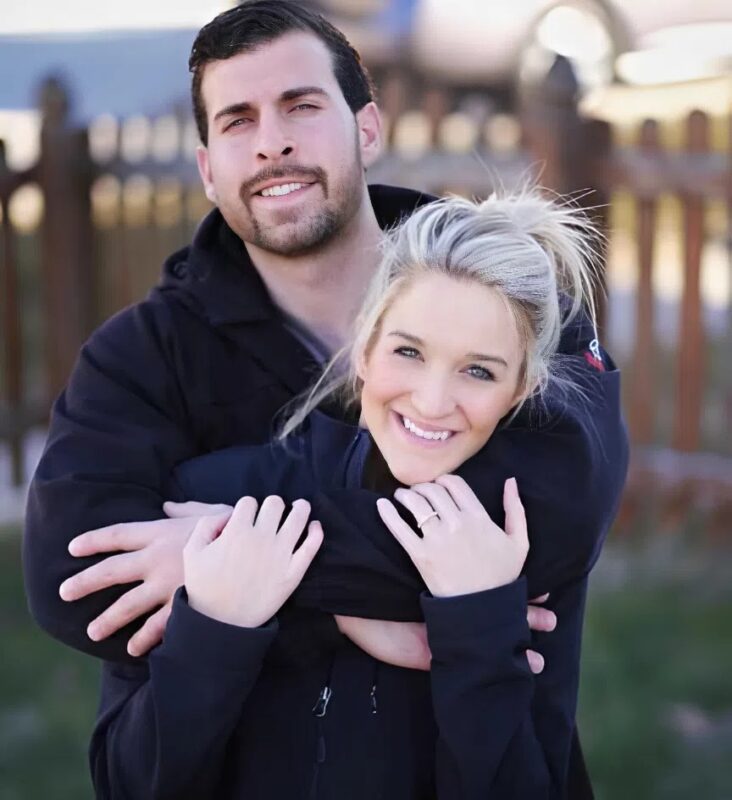
The following weeks blurred together. At 32 weeks, we had an amniocentesis that confirmed a syndrome we wouldn’t fully understand until birth. During that visit, the technician mentioned fluid around his heart, suggesting the terrifying possibility that he was already in complete heart failure. The weight of that reality crushed us. Giovanni and I mourned silently, each in our own way, over a life we had hoped to hold soon. “Complete heart failure.” The words echoed in my mind for days. Could we lose him? And if he survived, what kind of life would he have?
Then we met Dr. Eleanor Ross, a Pediatric Cardiologist. For the first time, someone didn’t just deliver grim news—they offered hope. She examined him carefully, taking her time. After a thorough scan, she delivered a diagnosis: Double Outlet Right Ventricle (DORV), Tetralogy of Fallot (TOF), Ventricular Septal Defect (VSD), and Pulmonary Stenosis. We left that appointment with a strange mix of relief and terror. At least we had a roadmap, but the road ahead looked treacherous. 🫀

By 34 weeks, our baby had stopped moving. The day I was scheduled for a C-section, a physician came in with grim news: the cardiology team wasn’t ready. They feared he was too small, and with his complex heart defect, interventions might be limited. “He’s too small. There may be nothing we can do,” they said. Our goal became reaching 37 weeks, but Sebastian had his own timeline.
He arrived just days later, tiny but fierce: 3 pounds, 14 ounces, 15 inches long, and immediately full of spirit. I remember hearing, “He’s here!” “He’s breathing!” and, unexpectedly, “He has a TON of hair!” 🌟 The joy was intense, but fleeting. Minutes later, a breathing tube was inserted, and the cardiology team whisked him away. I barely had time to process the tiny life I had just brought into the world.
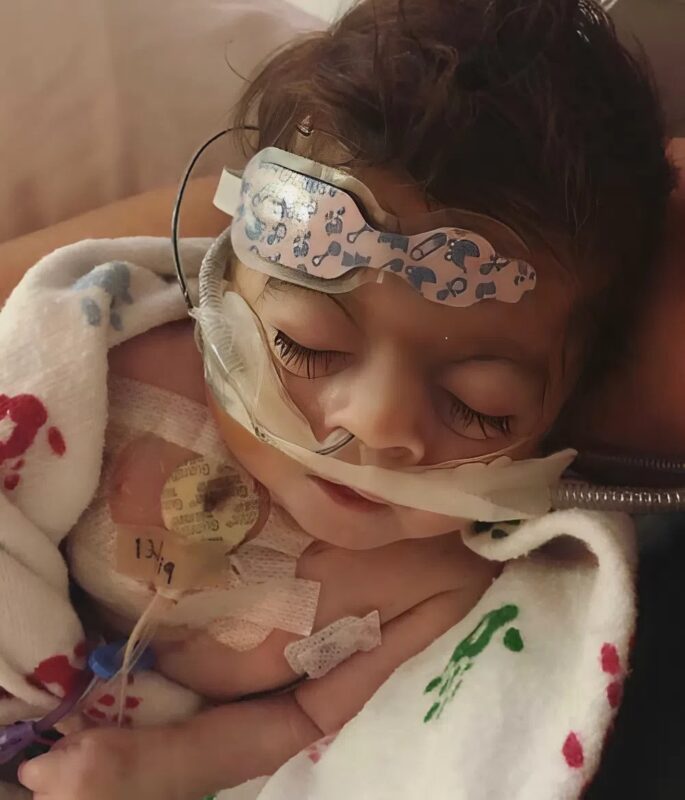
The next 100 days were a whirlwind of fear, hope, and constant vigilance. He was intubated for 80 of those days, and I held him only 29 times. He barely moved, barely opened his eyes, and on two occasions, we nearly lost him. On top of his heart defects, he was diagnosed with encephalopathy, an incurable brain condition. Specialists spoke of “minimal quality of life,” painting a bleak picture for the child we had dreamed of holding. 😢
Sebastian taught us more in those 100 days than we had ever imagined possible. Every small movement, every breath, every glance reminded us why he was here. He had Cornelia de Lange syndrome, a rare condition affecting 1 in 30,000 births. He had his first heart surgery at 11 days old, the second at 2 months, and a third at 5 months. Each procedure was grueling, fraught with complications, yet each time he emerged, he grew stronger. His resilience was astonishing. 💪
Doctors had predicted a life of limitations: deafness, possible blindness, inability to walk or talk, tube feeding for survival, and major developmental delays. But they couldn’t predict the heart, courage, and spirit Sebastian carried. They didn’t tell us his smile could light up an entire room, nor that his laughter could ease the stress of the hardest days. They didn’t tell us that caring for him would teach us patience, empathy, gratitude, and the true meaning of strength.
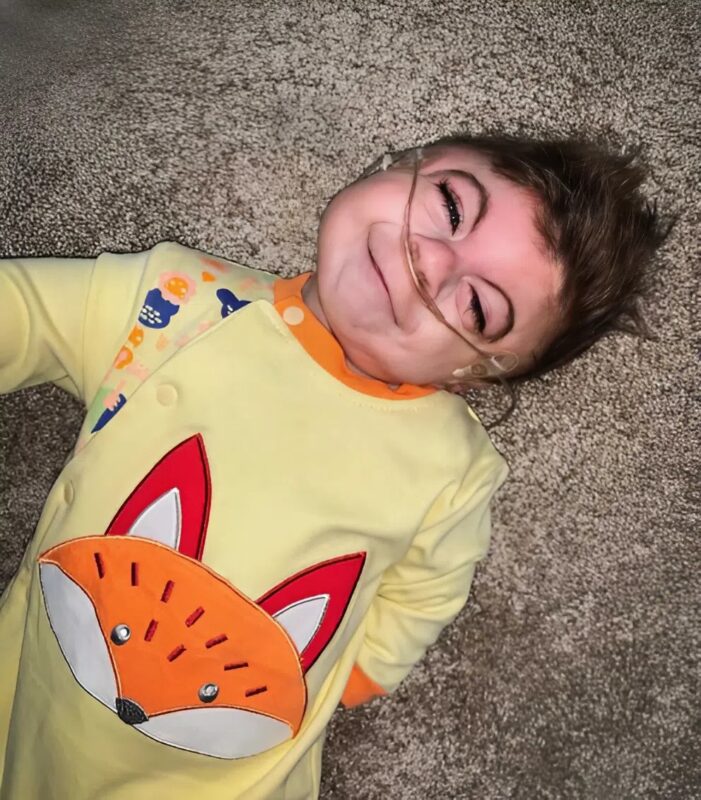
Every milestone was a battle won: a new sound, a tiny movement, a brief gaze, a taste of real food—bananas quickly became his favorite. We celebrated every victory fiercely because we knew how much each one mattered. Even as he endured surgeries, infections, and setbacks, his joy remained unshakable. He was a fighter, a teacher, a miracle wrapped in fragile skin. 💖
Sebastian turned one on October 3rd, 2018. His journey wasn’t over—he would need a fourth heart surgery, eyelid surgery for ptosis, and cochlear implants in hopes of giving him usable hearing. Yet every challenge only highlighted his determination. Every day with him was a reminder that life’s value can’t be measured in limitations or diagnoses.
And then, one unexpected morning, something extraordinary happened. As I sat beside him in the hospital room, adjusting his tube feed, he reached up with both tiny hands, grasped my fingers, and said clearly, “Mama.” I froze.
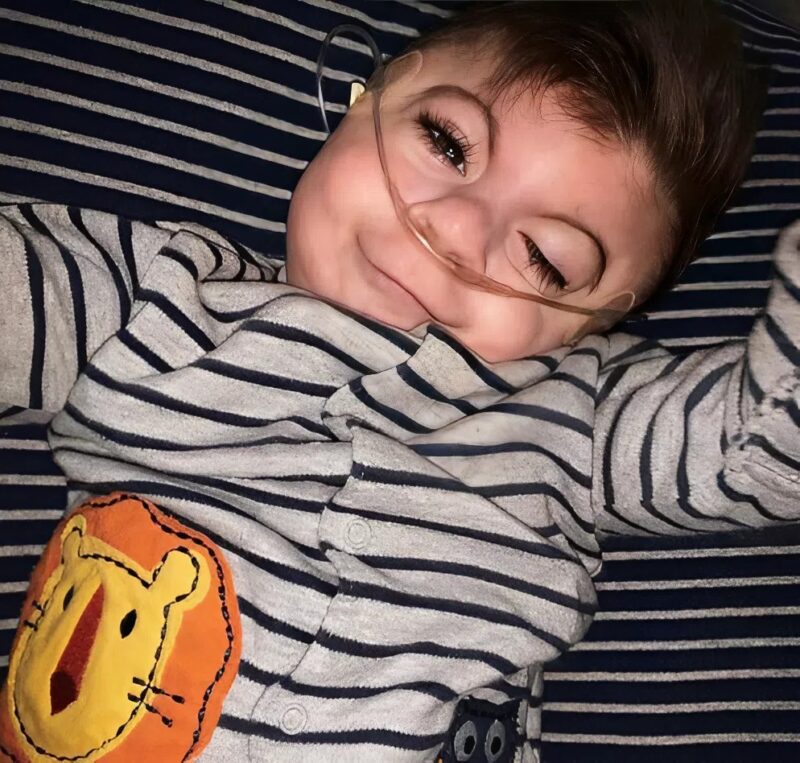
Tears streamed down my face. Giovanni gasped beside me. For months, months where the doctors said he might never speak, Sebastian had waited quietly, building strength in his own hidden way, and then chose that exact moment to show us the impossible. 🌈
From that day on, everything changed. His heart surgeries, his syndrome, his encephalopathy—all the obstacles didn’t vanish, but they didn’t define him. Sebastian defined himself: a tiny boy with fierce determination, a mischievous sparkle in his eyes, and the capacity to surprise everyone who ever doubted him.
He is ours. He is miraculous. And he is teaching the world, one small, powerful word at a time.