Richard Norris often said that if someone wrote his biography, they would have to start it twice. Once for the life he lived before 1997, and once for the life he had to learn from the beginning after the accident. Before, he was just a quiet young man from Virginia with ordinary dreams: a small house, a stable job, family barbecues on weekends. After, he became the man who avoided mirrors, daylight, and his own reflection in shop windows. 🌑
The accident was sudden, brutal, and irreversible. In a single night, a mistake with a gun destroyed his face and tore apart his sense of self. He survived, but the life he knew did not. While his body healed enough to function, his world shrank to the walls of his parents’ house. The person who had once moved through crowds unnoticed now planned every step to avoid being seen at all.
He learned to leave the house only when darkness fell, hiding his scars under a cap and a mask. Trips to the grocery store became missions: in and out as fast as possible, speaking as little as he could. Children sometimes stared. Adults tried not to, but their quick, shocked glances were even worse. He felt like a walking reminder of something people did not want to think about — fragility, pain, and how fast a life can change.
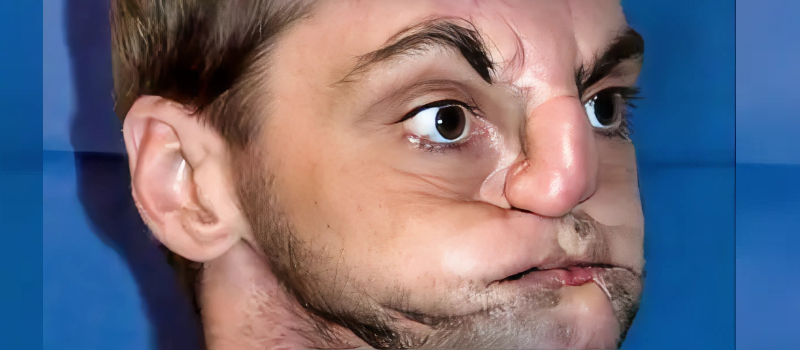
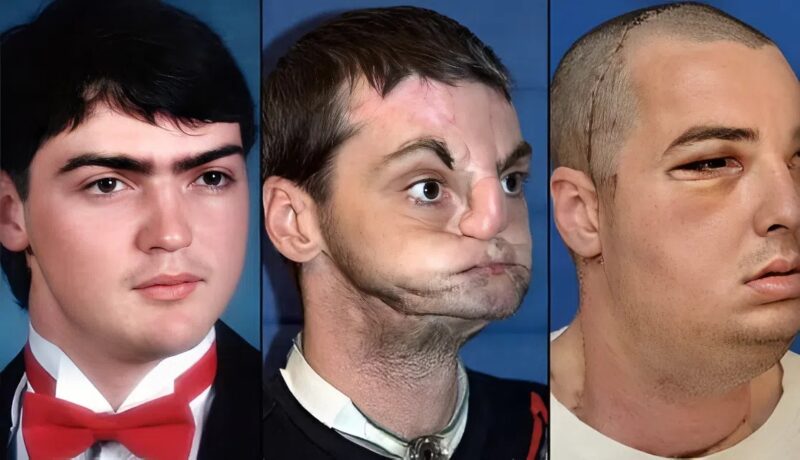
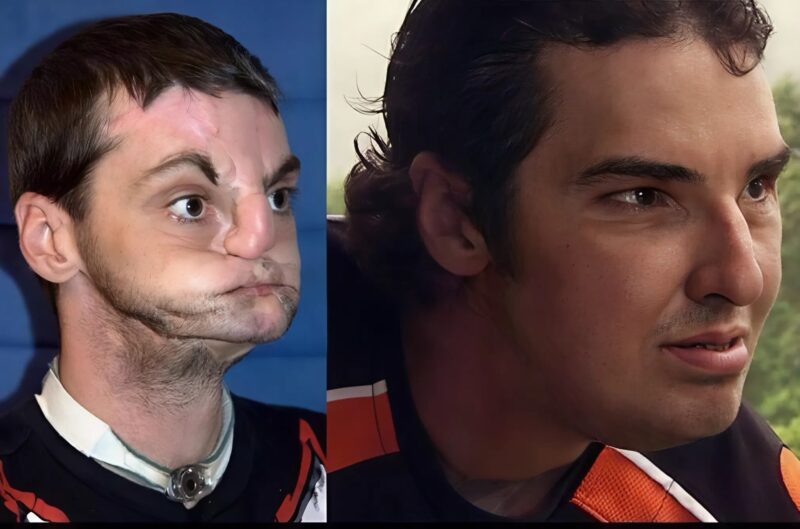
Doctors did what they could. Over the years, he underwent multiple surgeries aimed at repairing what remained. Each operation improved something; none of them gave him back what he had lost. When he looked in the mirror, he saw a survivor, but not a man he recognized. It was like looking at a stranger who happened to know all his memories.
By the time he heard about the experimental transplant at the University of Maryland, Richard had grown used to living in the shadows. Hope felt dangerous. Yet when the doctors explained what they wanted to attempt — the most extensive face transplant in medical history — something inside him flickered. Maybe this was not just another surgery. Maybe this was the chance he thought would never come. ⭐
The preparation was long and demanding. Teams of surgeons, psychologists, nurses, and therapists examined every aspect of his body and his mind. Could he handle the risks? Could he live with a face that came from someone else? Those questions kept him awake at night. He was not just being asked to trust medicine; he was being asked to trust himself again.
Then came the news about the donor: a 21-year-old man named Joshua Aversano, who had died in a car accident. Richard sat for a long time after hearing Joshua’s name, staring at the floor. Somewhere, a family was going through the worst days of their lives. Out of that grief, they had chosen to give a stranger a second chance. That knowledge humbled him more than anything. 💔➡️💖
The surgery lasted 36 hours. While he was asleep, dozens of specialists worked with almost impossible precision, reconnecting vessels, nerves, muscles, and bone. Outside the operating room, journalists talked about a medical breakthrough. Inside, it was also something quieter and more intimate: an act of faith that all this effort would allow one human being to step back into the world.
When Richard finally woke up, the room was full of soft voices and cautious smiles. His face felt heavy, wrapped in bandages and swollen. For a while he was afraid to ask for a mirror. What if he did not feel anything different? What if he did?
The day they finally placed the mirror in his hands, time seemed to slow down. He lifted it with shaking fingers and met the eyes he had always had, framed by features that were both new and strangely natural. There were still stitches, discoloration, signs of a long fight — but there was also something else he had not seen in years: the possibility of looking back without wanting to turn away. ✨
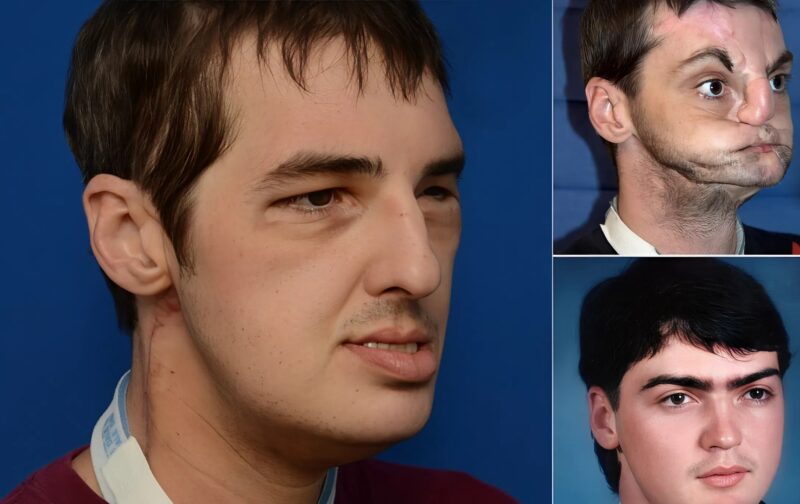
Recovery was a road, not a moment. He had to relearn how to chew, how to speak clearly, how to smile without pain. Every expression was a small experiment. Nurses joked gently with him, coaxing him into laughter. Physical therapists guided his muscles through simple movements that felt like enormous climbs. On some days, progress was obvious; on others, frustration and exhaustion nearly drowned his optimism.
What surprised him most was the world’s reaction. Instead of hiding his story, the hospital decided to share it. Photos, interviews, and reports appeared everywhere. People who had never met him wrote letters, sent messages, and told him that his courage made their own problems feel a little less impossible. He had spent so many years believing he was someone others wanted to avoid. Now strangers called him an inspiration. 💪✨
The most delicate moment of all awaited him outside the hospital: his meeting with Joshua’s sister, Rebecca. He worried for weeks about what to say. How do you look into the eyes of someone who lost a brother and now sees parts of his face on yours?
When Rebecca finally walked into the room, she was holding a small framed photograph. It was Joshua, smiling at the camera, alive and unhurt. She approached slowly, studying Richard’s features with a tenderness that broke his heart. Then she reached out and touched his forehead, just above his eyebrow.
“Hi,” she whispered. “I’m Rebecca.”
“Thank you,” Richard managed to say. His voice trembled, but the words were clear. “I don’t know how to ever—”
“You’re already doing it,” she replied, tears glistening in her eyes. “You’re living. That’s what he would have wanted.” ❤️
They sat together for a long time, sharing stories. She told him about Joshua’s sense of humor, his stubbornness, the way he never left the house without saying “I love you” to someone. Richard listened carefully, storing each detail like a gift. In return, he promised her something quietly: that every time he stepped into the world with confidence, he would remember whose chance he was carrying.
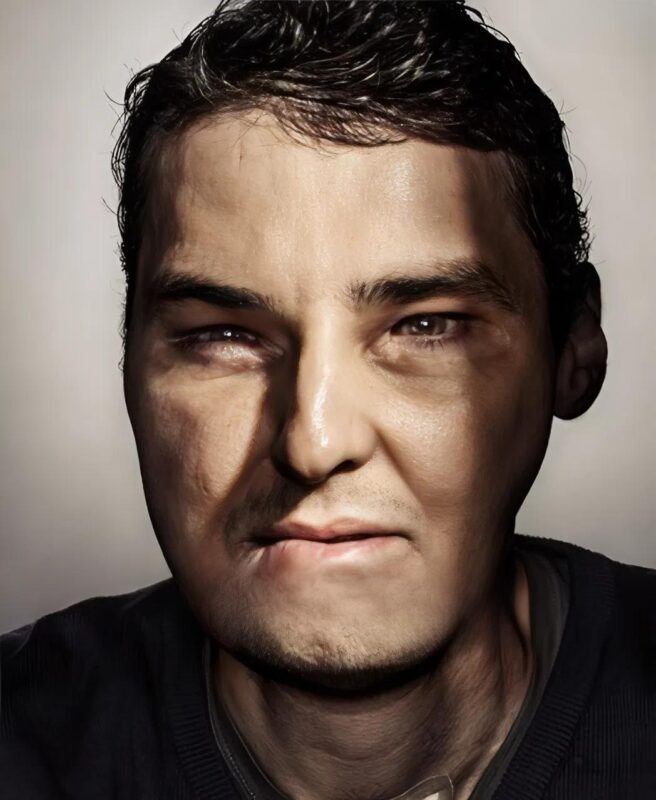
In the years that followed, Richard did more than adapt — he began to participate. He accepted invitations to speak at medical conferences and rehabilitation centers. At first, public speaking terrified him, but he soon realized he was not there to show his face. He was there to show that life after devastation was still life, not just survival.
One evening, after a talk at a hospital, a young man waited until the room had almost emptied before approaching him. He had scars peeking out from under his collar and eyes that carried too much weight for his age.
“I wanted to tell you something,” the young man said quietly. “I was sure my life was over. Then I read about you. I thought… if you found a way to keep going, maybe I can too.”
Richard did not give him advice or big speeches. He simply reached out and shook his hand.
“Then let’s both keep going,” he answered. 🕊️
Walking back to his hotel that night, Richard understood something he had not seen clearly before. The surgeons had given him a new face, and Joshua’s family had given him a new chance. But the meaning of that gift did not end with him. Every person who found strength in his journey added another quiet layer to Joshua’s legacy and to his own.
His life would never be what it was before 1997. It did not have to be. He was no longer just the man who hid from mirrors, nor only the patient from a historic operation. He was a bridge between loss and hope, between science and humanity, between a past that hurt and a future that, finally, did not scare him. 🫶✨