Maurice Desjardins had always believed that faces remembered stories better than names. Growing up in Quebec, he could forget a person’s birthday or hometown, but never the curve of a smile or the way eyes lit up when laughter arrived. That belief followed him into adulthood, into marriage, fatherhood, and eventually grandfatherhood. It made what happened on that cold hunting trip in 2011 feel especially cruel. In a single, deafening moment, a bullet tore away not just flesh and bone, but the very thing Maurice had always trusted to carry his life’s memories 😔.
When he woke in the hospital, the world felt distant, muffled, as if he were underwater. Doctors spoke gently, but their words landed heavy. His jaws were gone. His teeth, lips, nose, and much of the muscles that once shaped his expressions had been destroyed. Mirrors disappeared from his room. Maurice learned to breathe through a hole in his neck and communicate with scribbled notes. The man who once filled rooms with conversation now measured his days in silences.
Years passed like this. Outside, life continued, but Maurice remained mostly indoors. Friends visited less often, not out of cruelty, but uncertainty. He felt their hesitation before they entered the room, the split second where their eyes betrayed shock before kindness returned. Maurice, an extrovert by nature, began to avoid those moments altogether. His world shrank to the size of his living room, his television, and the gentle laughter of his granddaughter when she visited and tried not to stare.
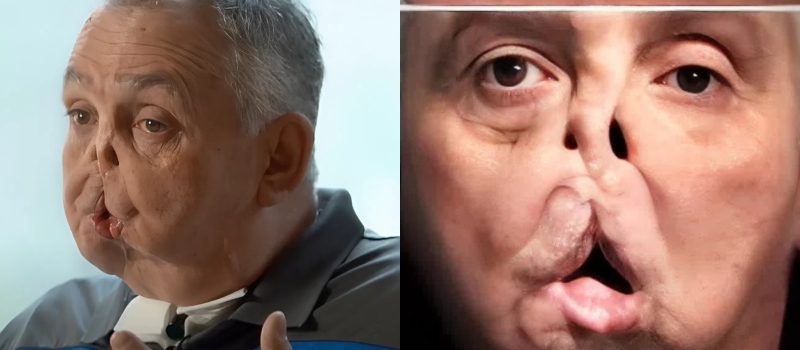
Still, somewhere beneath the pain and isolation, a stubborn ember remained 🔥. Maurice trained himself to endure endless medical evaluations, psychological tests, and consultations. He learned new forms of patience. When doctors spoke of a possibility so rare it sounded almost unreal, he listened without letting hope run too far ahead. A face transplant. Not reconstruction. Not prosthetics. A real, living face.
At Hôpital Maisonneuve-Rosemont in Montreal, Dr. Daniel Borsuk studied Maurice with the careful intensity of a man who understood the weight of faces. To him, the face was not merely anatomy, but identity itself. Dr. Borsuk had walked this path before, reconstructing faces destroyed by gunshots, once even shaping a new face using bone from a patient’s pelvis. Yet this case was different. Maurice was 64. No one his age had ever undergone such a procedure. The risks were enormous.
The surgery took thirty hours and nearly a hundred medical professionals working in synchronized exhaustion ⏳. Surgeons passed instruments with wordless precision. Nurses monitored numbers that refused to remain still. Somewhere beyond the sterile lights, a donor’s final gift waited, carrying another life’s quiet goodbye. When it was over, when the last stitch was placed, no one cheered. They simply exhaled.
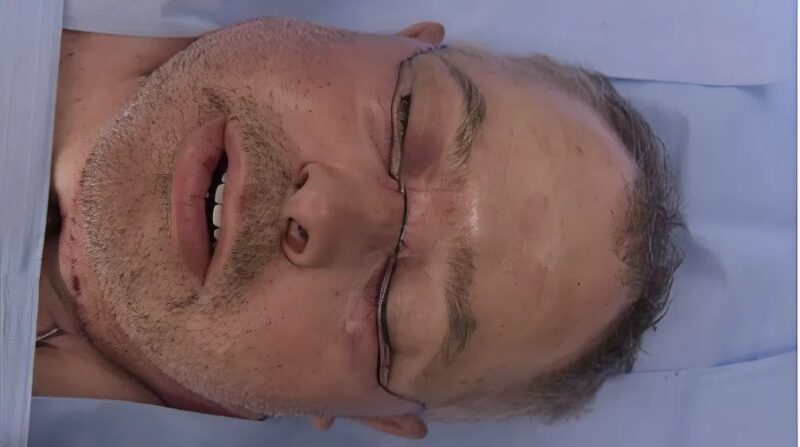
Recovery was slow and unforgiving. Maurice drifted between sleep and waking, pain and numbness. At times, he felt like a guest inside his own body. When he was finally allowed to sit upright, a nurse carefully positioned a mirror in front of him. His heart raced. The reflection staring back was unfamiliar, unsettling, and yet alive. He didn’t cry. Instead, he whispered a soft thank you, though he wasn’t sure to whom.
Weeks turned into months. Maurice learned how to eat again, how to breathe through his nose, how to shape words with lips that had never spoken his name before 😮. Smells returned gradually, first faint, then sharp. Coffee in the morning. Rain on pavement. His granddaughter’s shampoo when she hugged him. Each sensation felt like a small miracle, stacked carefully atop the last.
Dr. Borsuk watched with cautious pride. He spoke often about identity, about how facial injuries steal confidence and productivity. But Maurice surprised him. He did not chase his old face. He accepted the new one with a calm strength that impressed the entire team. “I don’t need to look like I used to,” Maurice once wrote on a pad. “I just need to live.”
News of the surgery spread. Journalists called. Cameras waited. Maurice declined most interviews. Fame felt unnecessary. What he wanted was simple. He wanted to walk outside with his granddaughter without people staring. He wanted to order food at a café without fear. He wanted to exist, unremarkable and free 🙂.
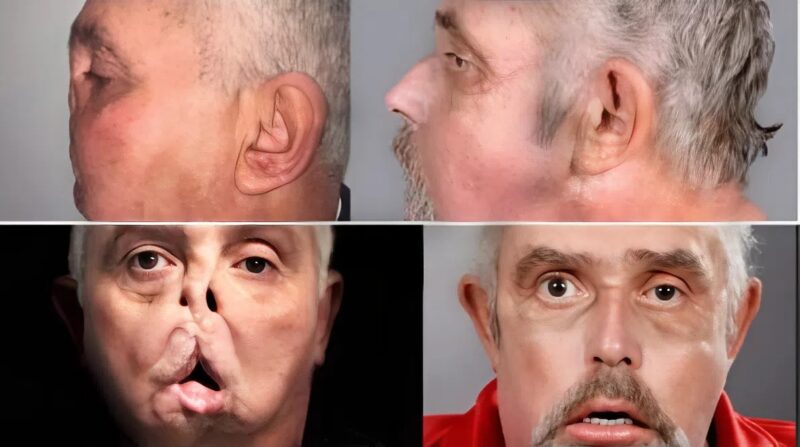
One afternoon, months after the surgery, Maurice finally agreed to leave the hospital without assistance. He stood at the entrance, feeling sunlight on his new skin. His granddaughter took his hand, her grip small but confident. Together, they walked down the street. No one stopped. No one gasped. A woman smiled at them in passing, then looked away, already thinking of something else. Maurice felt lighter than he had in years.
That evening, alone in his apartment, Maurice did something unexpected. He pulled out an old box from the back of a closet. Inside were photographs from before the accident: hunting trips, family gatherings, a younger man with a familiar face. He studied them carefully, then placed them back in the box. He did not feel sadness. He felt closure.
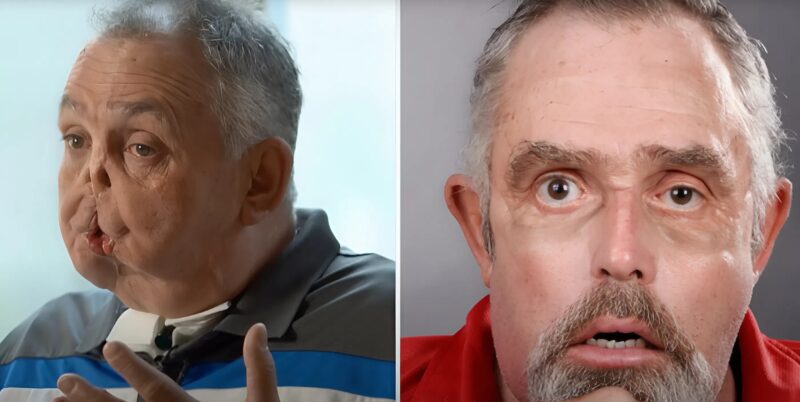
Later that night, unable to sleep, Maurice turned on the television. A news segment caught his attention. It spoke of another face transplant, this time involving a young woman named Katie Stubblefield, the youngest recipient in history. As Maurice listened, he felt a quiet connection across age, distance, and circumstance 💫. Different lives, same fragile line between despair and survival.
Before turning off the lights, Maurice stood once more before the mirror. He looked closely, not searching for resemblance, but for truth.
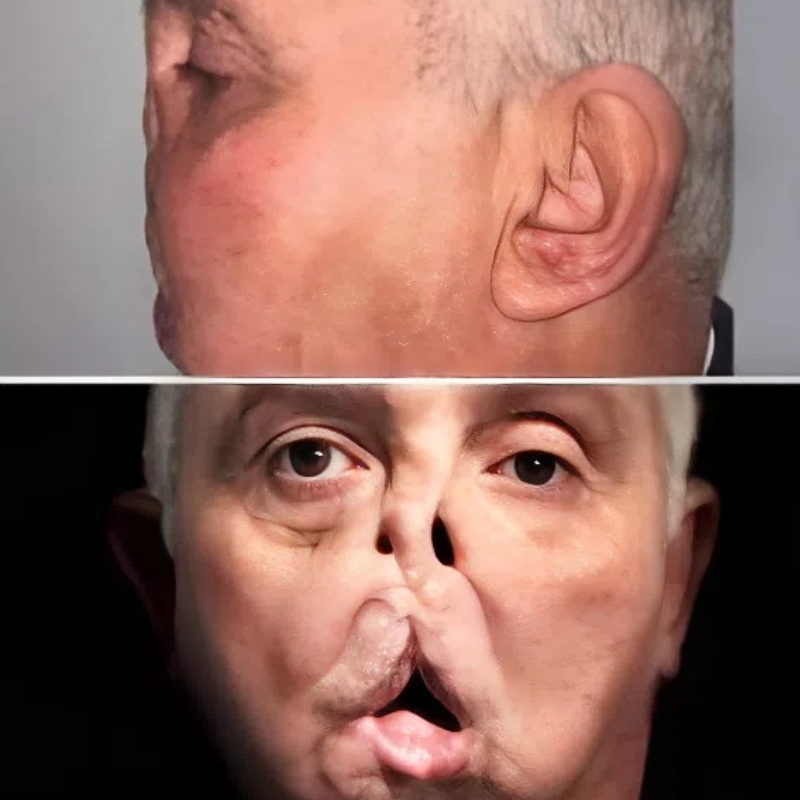
For the first time since 2011, he recognized himself. Not in bone or muscle, but in the steady gaze looking back.
And then, in a moment no doctor had predicted, Maurice smiled fully. Not because the surgery had given him a new face, but because it had finally taught him something he had never known before: faces do not carry stories. People do ❤️. And his, against all odds, was still being written.